In 1953, the war was still going strong and Viet Minh was in dire need of a victory. Vo Nguyen Giap, commander of Viet Minh, forced a big French troop into Dien Bien Phu, near the Laos border and cornered them (6). From November 1953 till May 1954, the French tried to stay strong but they were losing power (6). While the Vietnamese had peasants on bikes sending supplies to their troops, the French got airplanes to drop off supplies, which were shot down by Vietnam (6).
Showing posts with label french. Show all posts
Showing posts with label french. Show all posts
Friday, March 2, 2012

The Colonial Experience of Vietnam
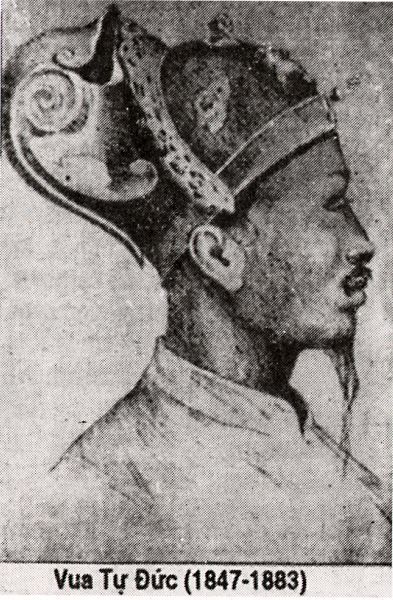
In June of 1862, Tu Duc, Vietnam’s emperor, made a treaty with France. He agreed to give away the provinces of Gia Dinh, Dinh Tuong and Bien Hoa. Duc also allowed religious liberty to the French. Due to this controversial treaty, the Vietnamese began rioting and Tu Duc handed over power to the French inspectors; his position became purely nominal. Then 12 years later, Paul-Louis-Felix Philastre, a French diplomat to Vietnam, made a treaty with Tu Duc. In this treaty, Tu Duc recognized French control over six provinces in Cochinchina (South Vietnam). Philastre, motivated by French traders, arranged for Quinonh, Hai Phong, Danang and Hanoi to be open ports for trading. The treaty also entailed legal French navigation of the Red River and toleration of Christians in Vietnam. (7)
From 1878 to 1882, Vietnam experienced drastic changes. As the French began to take full control of Vietnam, the official writing form of Vietnam changed to Quoc-ngu, a Romanized form of Vietnamese (7). Along with these linguistic changes, the landscape of Vietnam also morphed. Governor-General Paul Doumer created a communication network by building bridges, highways and railroads all across the country (6). He also moved the capital to Hanoi (6). Doumer created a society of forced labor and heavy taxes ruled by a centralized government (6). Economic greed motivated France's severe modifications of Vietnam (6). But they also wanted to get the Vietnamese people of their side… If the Vietnamese joined the French, they became part of the lower level of the French bureaucracy (6). They were treated better and given a decent wage (6). If they were Catholic, the benefits were even greater (6).
In 1907, French security over the colony loosened and the Vietnamese were granted some freedom of press (6). Nationalism and confidence increased as Vietnamese literature was published in the newspapers and at school (6). This led to the Free School Movement where people fought for Vietnamese history, rather than French, to be taught in schools (6). Although their efforts were strong, the French shut down the movement in 1908 (6). Security tightened and once again, the French had strict control over everything (6). Those with radical ideas were no longer accepted or safe in Vietnam, so they had to leave the country to be educated elsewhere (6). Younger Vietnamese scholars fled Vietnam in search of more accepting countries (6). Upon their departure, the scholars learned about Marxism-Leninism, whose works spoke of a colonization free world (6). This new idea was called Communism and was a much more appealing alternative to monarchy and unfair landowning laws occurring in Vietnam (6).
Initial Conquest of Vietnam
In the 19th century, France colonized Vietnam (1). With economic profit in mind, they exploited the land and forced Vietnamese peasants to become servants (5). After taking control over the Mekong Delta, a prime trade location, the French felt obligated to culturally influence Vietnam (5). First came religion, as French missionaries began to introduce Catholicism to the Vietnamese and later came literature, language and history (6). This resulted in a mix of economic, cultural and political affairs.
Subscribe to:
Posts (Atom)